

AI media · Independent · No hype

AI makes promises. Le Recul verifies.

We test what AI promises, to separate what works, what gets in the way and what is oversold.

AI ranking

Full ranking →
  1. 01 98.58 Anthropic
  2. 02 97.52 Downward trend Anthropic
  3. 03 97.16 Downward trend Anthropic
  4. 04 96.45 Downward trend Anthropic
  5. 05 95.92 Downward trend Anthropic
  6. 06 95.36 Upward trend Anthropic

Comparisons

All comparisons →

Two tools, the same task, one verdict.

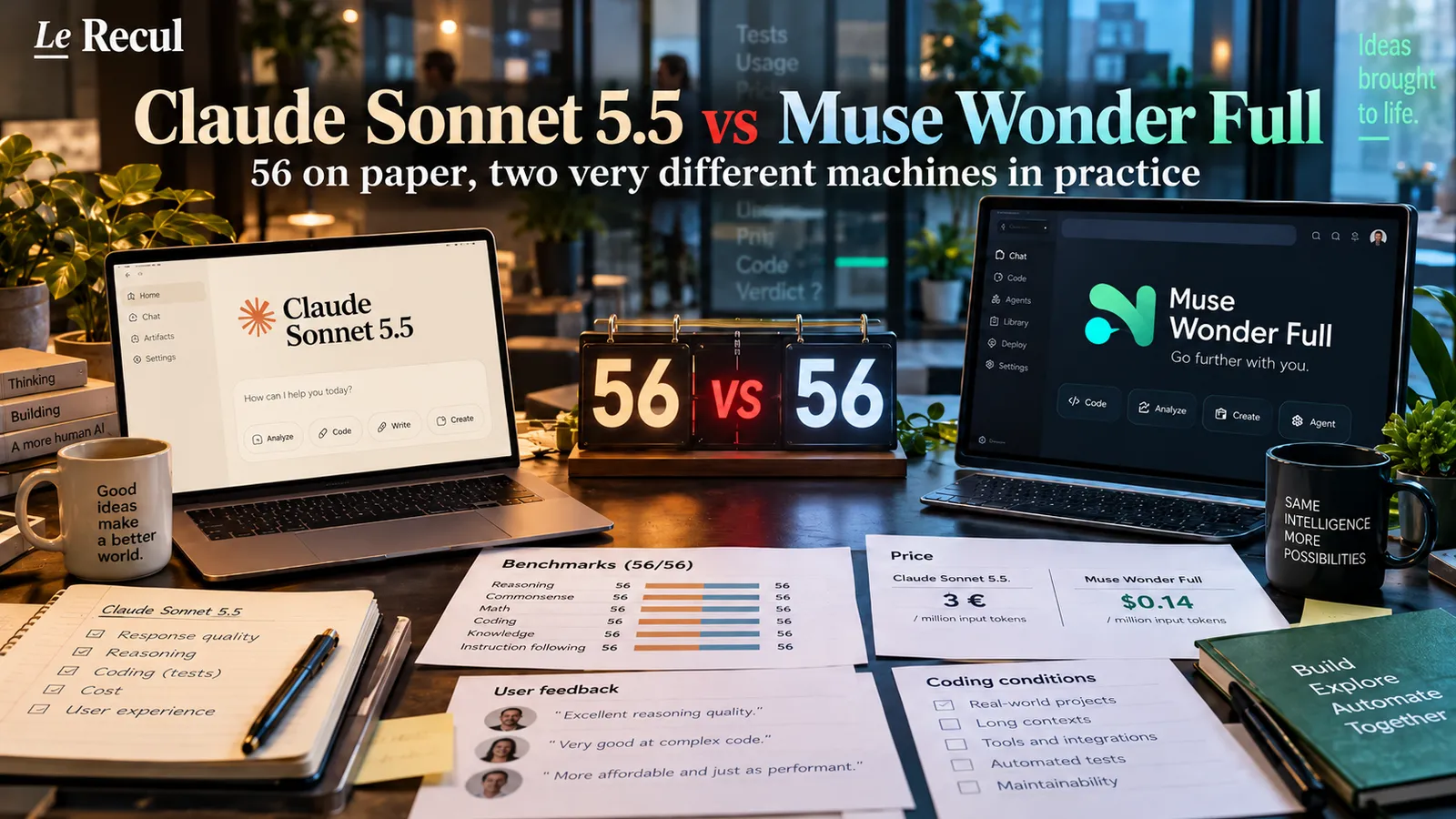
GPT-6.1 Terra, GPT-6.1 Sol or Claude Sonnet 5.5: the cheapest per token is not always the cheapest per task

Comparisons

GPT-6.1 Terra, GPT-6.1 Sol or Claude Sonnet 5.5: the cheapest per token is not always the cheapest per task

GPT-6.1 Terra, launched by OpenAI on 26 October 2026, costs $1 per million input tokens: half the price of GPT-6.1 Sol and Claude Sonnet 5.5, both listed at $2. But a model is paid by the task, not by the token. We compared all three, with GPT-6 Luna and Claude Opus 5.5 as reference points, using the detailed values of OpenAI's charts, its safety card, independent measurements from Artificial Analysis and Plotly, and early user feedback. The verdict changes with the use case, and above all with the effort level you set.

Tested promises

All tested promises →

One promise. One test. One verdict.

Partly

Tested promise

Base44: the app really does arrive in minutes, the advertised price does not

The technical half of the promise is kept, and it is measurable: a four-screen app with a database, three user roles and authentication comes out in under six minutes and goes live in ten seconds. That is not marketing, it is reproducible. What is not kept is the price.

Read the test →

Overstated

Tested promise

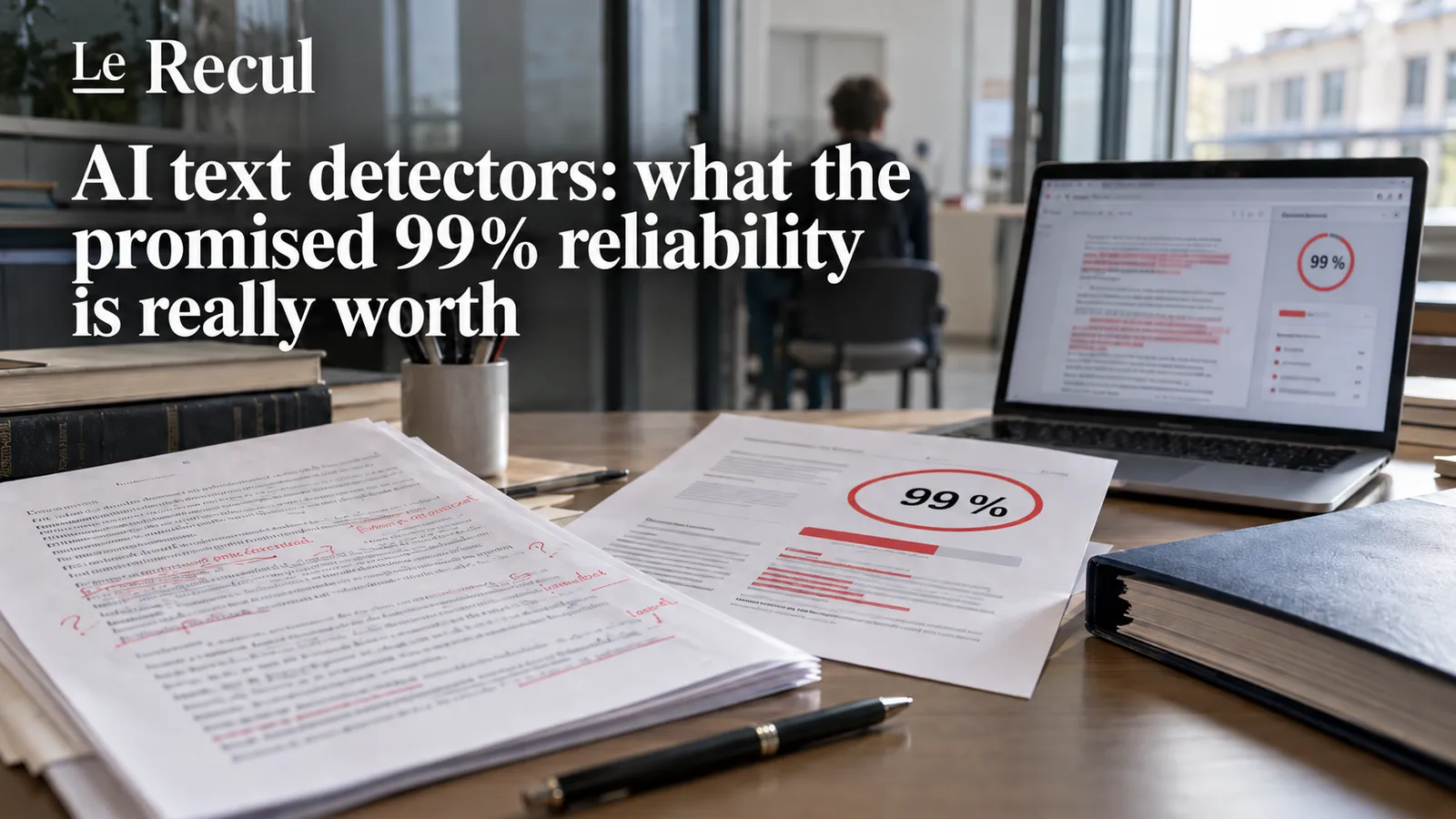
AI text detectors: what the promised 99% reliability is really worth

The announced figures are not invented, but they describe a laboratory situation that is almost never the one in which the tool is used. Compilatio measures 94 to 99% reliability on homogeneous texts — entirely human or entirely generated — from questions put to the AI "without specific instructions on writing style".

Read the test →

Misleading

Tested promise

Can you really make €10,000 a month with AI?

The promise is misleading in its marketed form — accessible, fast, almost passive. A narrow path does exist, but it looks nothing like any of the adverts selling the promise.

Read the test →

Partly

Tested promise

Social media automated by AI: real gains, or a generic content factory?

AI genuinely speeds up production (scripts, voice-overs, visuals, editing, subtitles, multi-platform publishing): the "produce faster" promise is kept. But direct pay-per-view monetisation stays low and conditional — high thresholds, videos of at least 1 minute on TikTok, content judged original. The real revenue comes from what you sell behind the account, not from the workflow itself.

Read the test →